Practice guide5–7 minutes6 sections

What Is Your Mindfulness Personality Type?

Begin step 1

What Is Your Mindfulness Personality Type?

is a short visual guide for moments connected to anxiety avoidance.

It covers one core idea: this guide groups habitual tendencies as approach, avoidance and “go with the flow”, linking them with automatic reactions of approach/fight, flight….

You will in the episode, note: Am I approaching, avoiding, or going along automatically?

What does this give now, then choose what fits next.

The aim is More behavioral freedom through gradual, deliberate practice.

Edited aspractice guide·6 focused visual steps
Working edition 1Published July 22, 2026Last reviewed August 2, 2026Editorial standardsSuggest a correction
01
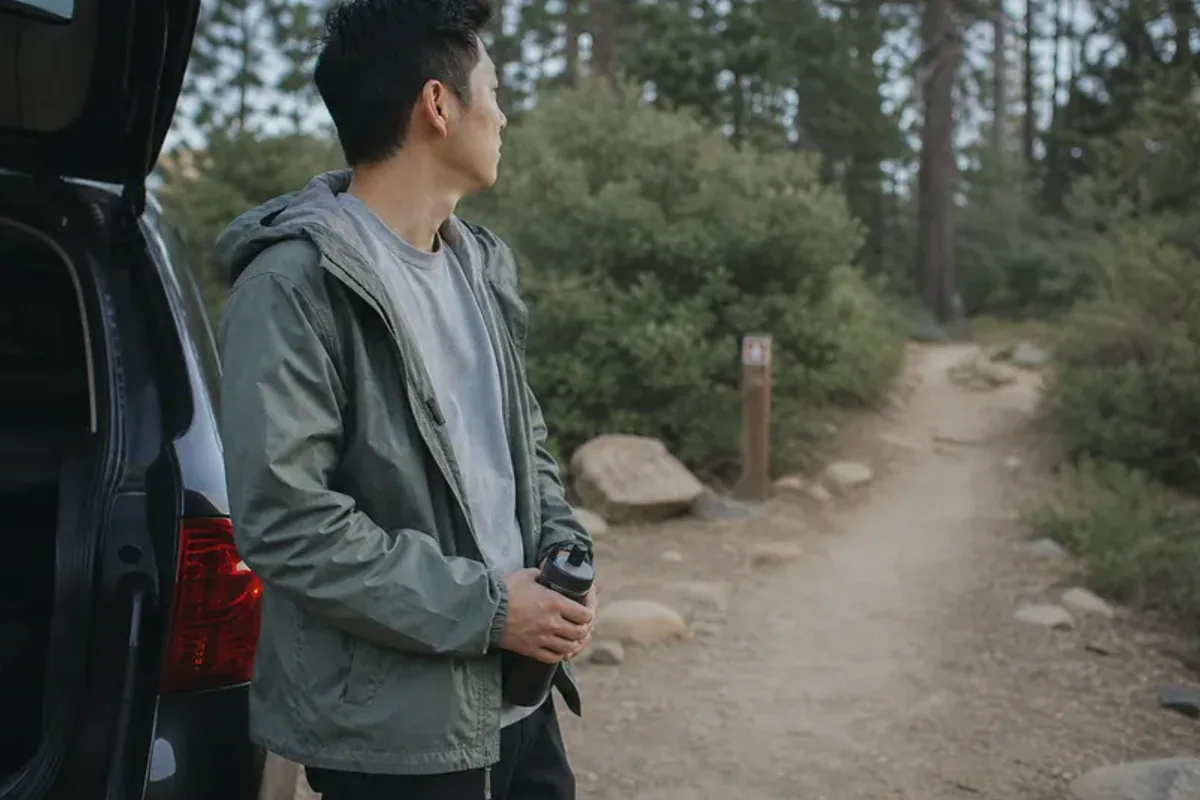
A person stepping from a softly lit doorway onto a quiet tree-lined path.

Step 1 of 6

Check your starting point: What Is Your Mindfulness Personality Type?

When short-term relief is quietly making your life smaller…

Notice what fits this situation today:

  • People differ in their habitual response styles
  • Every trend has advantages and blind spots
  • Observation reduces label fusion
  • I am not sure yet—I just want to understand

Next: This guide groups habitual tendencies as approach, avoidance and “go with the flow”, linking them with automatic…
02
A person stepping from a softly lit doorway onto a quiet tree-lined path.

Step 2 of 6

This guide groups habitual tendencies as approach, avoidance and “go with the flow”, linking them with automatic…

  • this guide groups habitual tendencies as approach, avoidance and “go with the flow”, linking them with automatic reactions of approach/fight, flight and freezing.
  • The informal questionnaire is offered not as a fixed personality type, but as a way to see strengths and typical behavior patterns.

Next: Map the pattern: What Is Your Mindfulness Personality Type?
03
A person stepping from a softly lit doorway onto a quiet tree-lined path.

Step 3 of 6

Map the pattern: What Is Your Mindfulness Personality Type?

Look at the moving parts of What Is Your Mindfulness Personality Type? one at a time:

  • People differ in their habitual response styles.
  • Every trend has advantages and blind spots.
  • Observation reduces label fusion.
Next: In the episode, note: Am I approaching, avoiding, or going along automatically? What does this…
04
A person stepping from a softly lit doorway onto a quiet tree-lined path.

Step 4 of 6

In the episode, note: Am I approaching, avoiding, or going along automatically? What does this…

  • Pause for a few seconds. Check whether this practice feels safe enough right now.
  • In the episode, note: Am I approaching, avoiding, or going along automatically? What does this give now?
  • Notice what changed in your body or thoughts. Do not grade yourself—collect information.

Quick check after the practice:

  • What changed, even by 1%?
  • What stayed the same?
  • What do you need now: continue, stop, or ask someone for support?

Next: What this may change: What Is Your Mindfulness Personality Type?
05
A person stepping from a softly lit doorway onto a quiet tree-lined path.

Step 5 of 6

What this may change: What Is Your Mindfulness Personality Type?

More behavioral freedom through gradual, deliberate practice.

The useful shift is more clarity, less autopilot, and one available choice.
Next: Choose a next step: What Is Your Mindfulness Personality Type?
06
A person stepping from a softly lit doorway onto a quiet tree-lined path.

Step 6 of 6

Choose a next step: What Is Your Mindfulness Personality Type?

You do not have to resolve this whole situation today. You worked directly with “What Is Your Mindfulness Personality Type?” and chose one possible response.

Choose what fits now:

  • “Save one next step”
  • “Come back later”
  • “I need support from a person”

After this guide

Keep the next step small.

More behavioral freedom through gradual, deliberate practice.

Where to go next

Choose the next useful idea

Choose one if it fits what you need now.

Sources & evidence

Where this guide comes from

The book is the editorial starting point. The research below checks or qualifies the broader ideas used in this guide.

Adapted from

Unwinding Anxiety

New Science Shows How to Break the Cycles of Worry and Fear to Heal Your Mind

Chapter 9, “What Is Your Mindfulness Personality Type?” · source pages 97–104

View publisher record (opens in a new tab)
Written by
Judson Brewer, MD, PhD (opens in a new tab)Addiction psychiatrist and neuroscientist; Professor of Behavioral and Social Sciences and of Psychiatry and Human Behavior at Brown University; Director of Research and Innovation at the Mindfulness Center at Brown.
Edition used
Avery, an imprint of Penguin Random House, 2021 · ISBN 9780593421406
Formal review
The trade-book edition does not identify a formal peer-review or clinical-review panel. Endorsements from clinicians are recorded separately.
Public endorsements — not formal review

Daniel J. Siegel, MD (opens in a new tab) — Physician and author; Mark Williams (opens in a new tab) — Emeritus Professor of Clinical Psychology, University of Oxford

Editorial limitations of this book source
  • The book draws on the author's clinical work and research but is not itself a peer-reviewed treatment protocol.
  • The principal app trial was small and involved investigators connected to the product; results require independent replication.
  • Internal-attention practices can intensify symptoms for some people with panic, trauma, or dissociation.
  • New or concerning physical symptoms must not automatically be attributed to anxiety.

Research context

Supporting and qualifying references

Reviewed 2026-08-04

  1. 01

    Randomized Controlled Trial · 2021

    Clinical Efficacy and Psychological Mechanisms of an App-Based Digital Therapeutic for Generalized Anxiety Disorder (opens in a new tab)

    What it supports: A small randomized trial found benefit from the full Unwinding Anxiety app added to treatment as usual for adults with GAD.

    Limits and disclosures

    Limit: Sixty-five randomized participants, treatment-as-usual control, self-report outcomes, incomplete program completion, and need for independent replication; it does not validate each book chapter or NotMyNoise adaptation.

    Disclosure: Judson Brewer is the book author and was connected to development/commercialization of the studied program; treat as product-linked evidence.

  2. 02

    Peer Reviewed Meta Analysis · 2018

    Cognitive behavioral therapy for anxiety and related disorders: A meta-analysis of randomized placebo-controlled trials (opens in a new tab)

    What it supports: CBT is moderately efficacious for anxiety and related disorders compared with placebo controls.

    Limits and disclosures

    Limit: Evidence supports structured therapy, not the clinical equivalence of a short educational guide.

    Disclosure: No relationship to NotMyNoise identified.

  3. 03

    Systematic Review And Meta Analysis · 2014

    Meditation programs for psychological stress and well-being: a systematic review and meta-analysis (opens in a new tab)

    What it supports: Mindfulness meditation programs showed small improvements in anxiety, depression, and pain compared with nonspecific active controls.

    Limits and disclosures

    Limit: Heterogeneous programs and populations; limited or insufficient evidence for several other claimed outcomes.

    Disclosure: Independent evidence source; not specific to the books or NotMyNoise.