Name the event
Write down what was said or done, where it happened, and who was there.
For teens
Feeling judged, left out, or unsafe can make every school day feel bigger. You do not have to diagnose yourself or solve it alone.
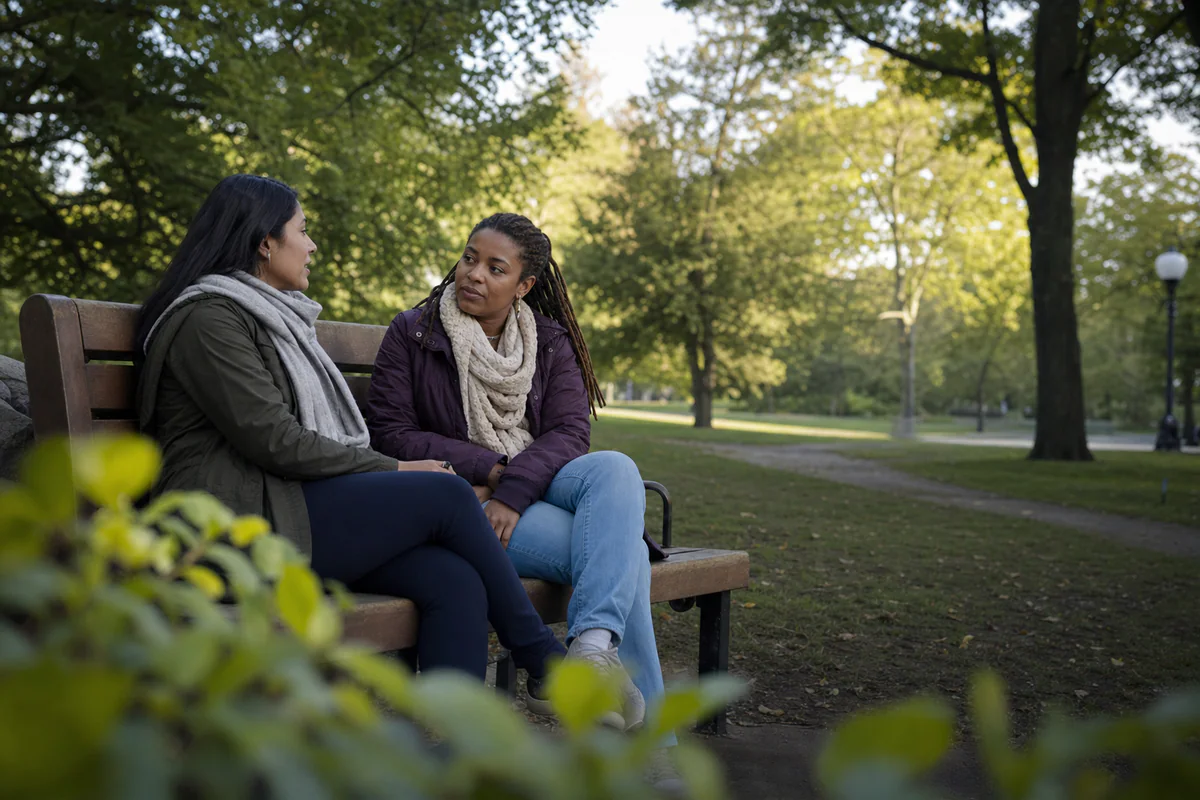
First, separate the possibilities
You can work with an anxious prediction. Bullying, threats, harassment, or harm need support from an adult who can help make the situation safer.
Write down what was said or done, where it happened, and who was there.
Try: “My mind predicts everyone will judge me.” A prediction can feel real without being a fact.
A parent, relative, teacher, coach, school counselor, or another adult can help you decide what to do next.
If exclusion or bullying may be involved
Start with one concrete sentence. If the first adult does not help, tell another adult. If anyone is in immediate danger, contact local emergency services now.
How to talk to an adult about bullying ↗“Something at school is making me feel unsafe or left out, and I need help thinking it through.”
Describe one recent event instead of trying to prove the whole pattern at once.
“What can we do today to make tomorrow safer or easier?”
Short guides
These guides are optional. Stop if one is enough, or return later.
A little more distance, attention, and freedom to act by values.
Open this guideA more flexible self-story that supports action.
Open this guideA clearer bridge from private struggle to appropriate human support.
Open this guide